Should I learn flags or capitals first?
Start with the topic that interests you or solves your biggest gap. You can add the other connections later; there is no requirement to finish one before beginning another.
For curious adults
You do not need to know every country before you can enjoy learning geography. Start with a region that interests you, connect a few countries to their capitals, and place them on a map. Small, specific questions make it easier to decide what to practise next.
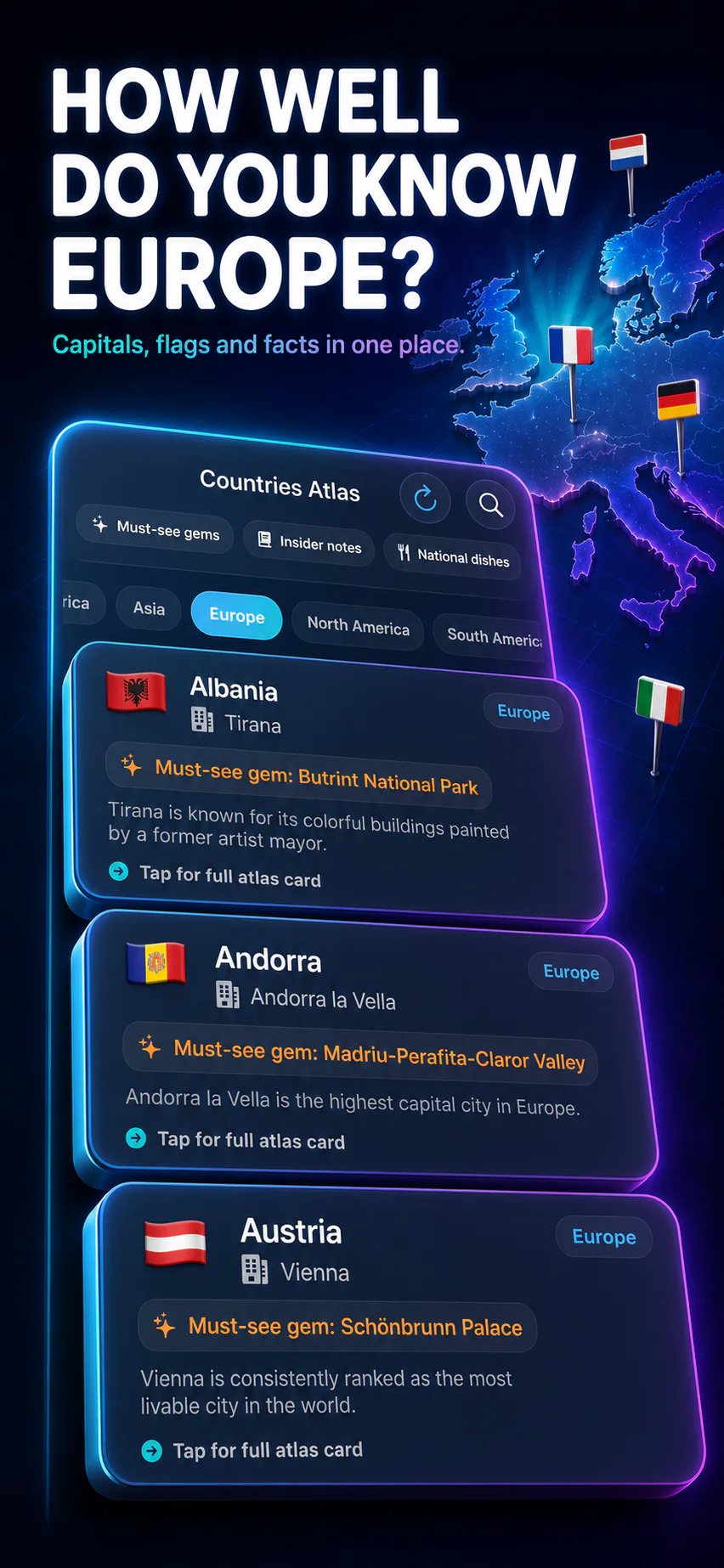
A trip, a news story, a family connection, or a quiz night can give you a useful starting point. Pick one region and a small set of countries within it. Find them in a reference before testing yourself. The first goal is familiarity with those places, not a perfect score across the whole world.
If country names feel familiar but locations do not, start with the map. If you can locate countries but struggle with capitals, practise the name pairs. Let your own gaps determine the order.
You can work on these connections one at a time. Use a reference to check answers and keep unfamiliar spellings in a short note rather than trying to remember everything at once.
Begin by answering a few questions from the last session without looking. Check them, then study a small amount of new material. Finish with one question that connects a country to a map location or flag. Write down anything you want to revisit so you have an obvious starting point next time.
A five-minute slot can be a convenient habit, but it is not a promise about learning speed. Stop with a clear next step and give yourself more time when a place or name is unfamiliar.
When you mix up two answers, compare them directly. Is it the country name, the capital, or the location that is confusing? Try one question for that specific problem. A correction is more actionable than deciding that you are simply “bad at geography.”
If you enjoy trivia, keep a separate round for fun and another for unfamiliar places. That way you can enjoy what you already know while still making room to learn.
GeoCapitals offers short capital quizzes, flags, map challenges, and country Atlas cards on iPhone and iPad. Choose a practice mode that fits your current question, then use country context to discover something you want to explore further.
For your next step, try learning countries on a map or the world capitals study method. If written decks have become repetitive, explore our alternatives to geography flashcards. You can keep your learning narrow until you feel ready to widen the map.
Start with the topic that interests you or solves your biggest gap. You can add the other connections later; there is no requirement to finish one before beginning another.
Return to a small set of questions after a break and compare your answers with an earlier attempt. Check whether you can explain the country’s location as well as recognise a name.
Try a destination round before a trip: find the country, name its capital, and identify its flag. For a general-knowledge evening, take turns reading questions from a printed sheet, then explain one correction each. For solo practice, reverse a familiar country-capital list and see which names still come back.
Build a paper round with the free geography quiz generator, choosing the adult setting and written recall when you want fewer clues. You can play with other people using the worksheet; this does not require a multiplayer feature in the app.
To improve geography knowledge beyond quiz answers, choose one missed country and explore its map location or a country story. GeoCapitals offers an iPhone and iPad practice option for learning world geography as an adult, connecting capitals, flags, maps, and context. Keep a small record of what you can recall after a break.
Practise with GeoCapitals on iPhone and iPad. The download includes limited starter access; most quiz modes and the full Atlas require an optional Pro subscription.
Test your geography knowledge across capitals, flags, maps and country context, then choose a short plan based on the questions you missed.